
Think You Know Your Numbers?
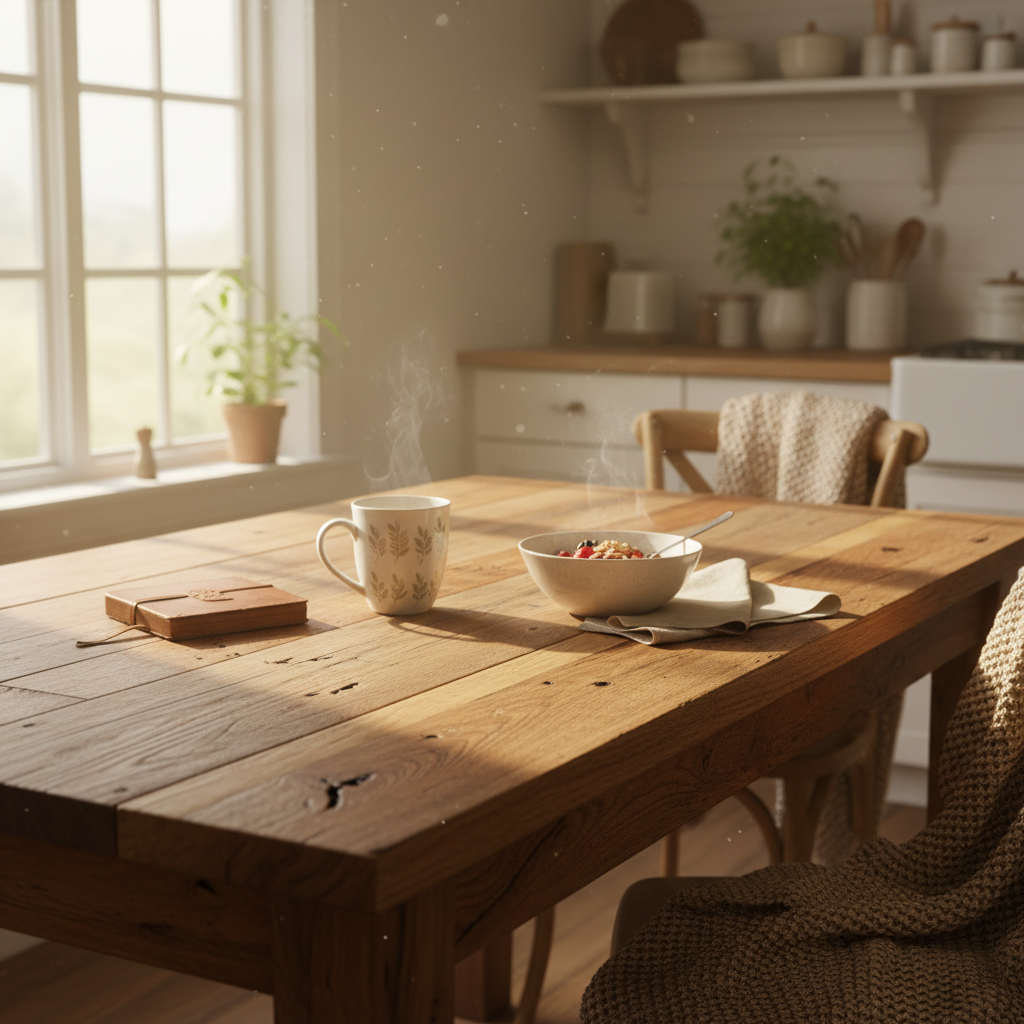
Wooden tiles. Kitchen table. Twenty minutes. Abacus turns arithmetic into a game your kids will beg to play again.
Free 2-minute quiz · Personalized set recommendation
Scroll to play
One Round.
Four Simple Steps.
The fox explains everything. Pull up a chair.
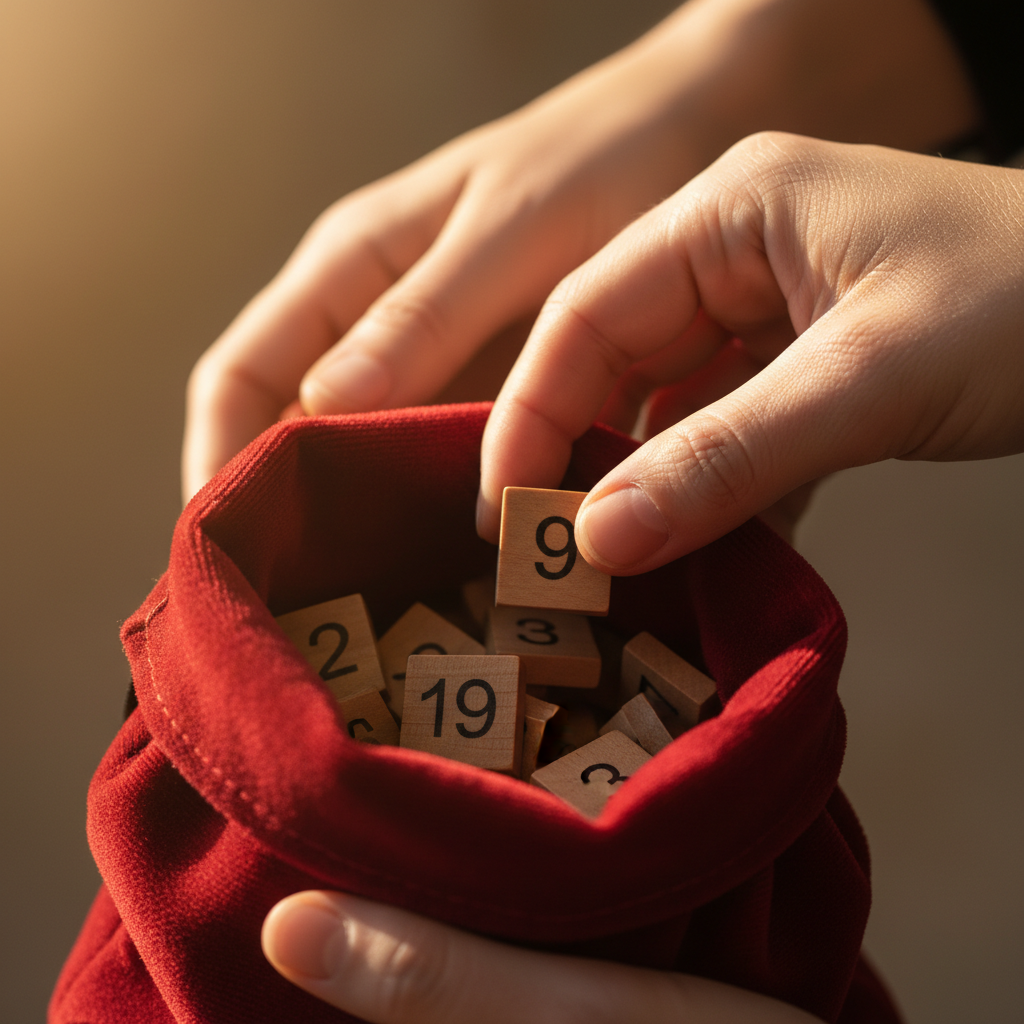
Reach into the bag. No peeking.
Each player draws seven tiles from the velvet bag — numbers, operators, equals signs. Some draws are brilliant. Some are disasters. That's the game. You'll spend the first thirty seconds squinting at your hand like a poker player, and I'll be watching from across the table with one eyebrow raised.
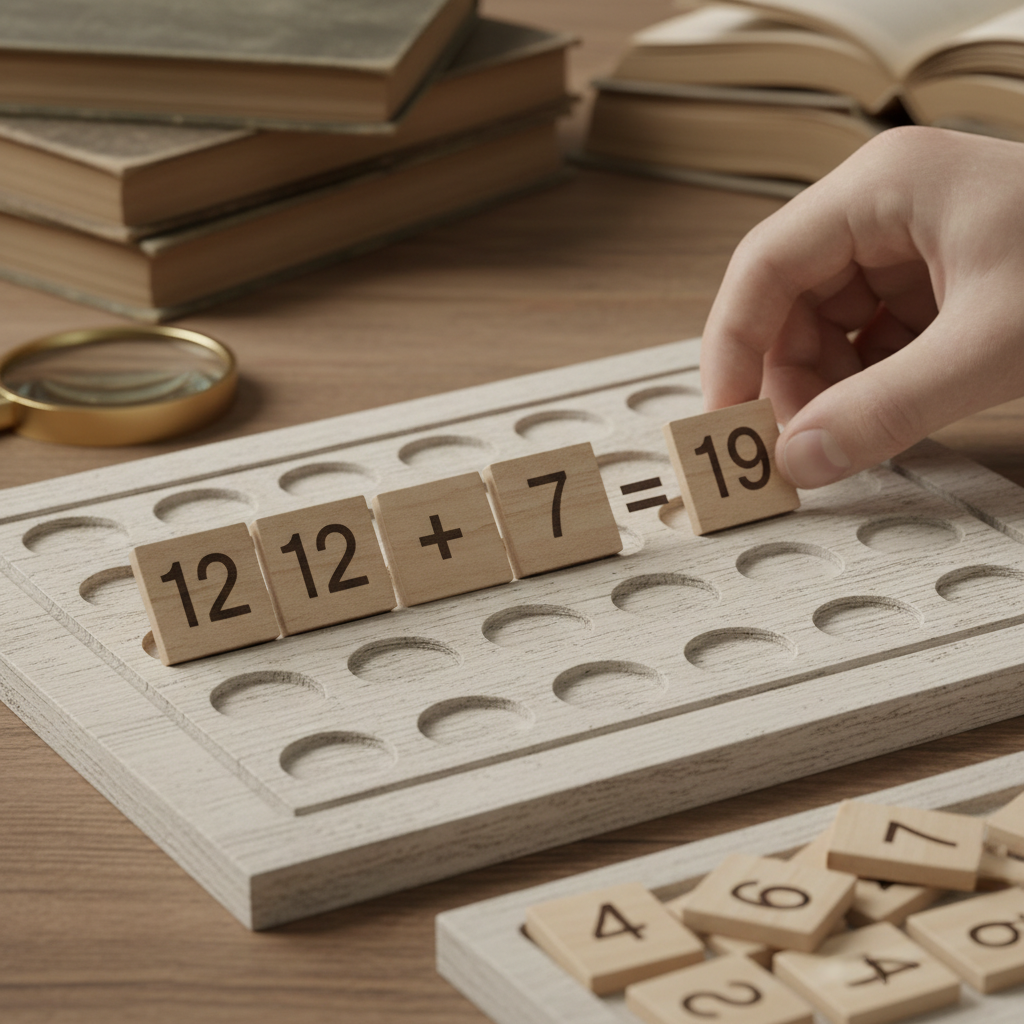
Lay it down before time runs out.
You have ninety seconds. Slide your tiles into place on the board — left to right, the equation has to balance. 3 + 4 = 7. Simple enough. But wait until round three when someone plays a subtraction trap and you're holding nothing but fives. That's when the real math starts.
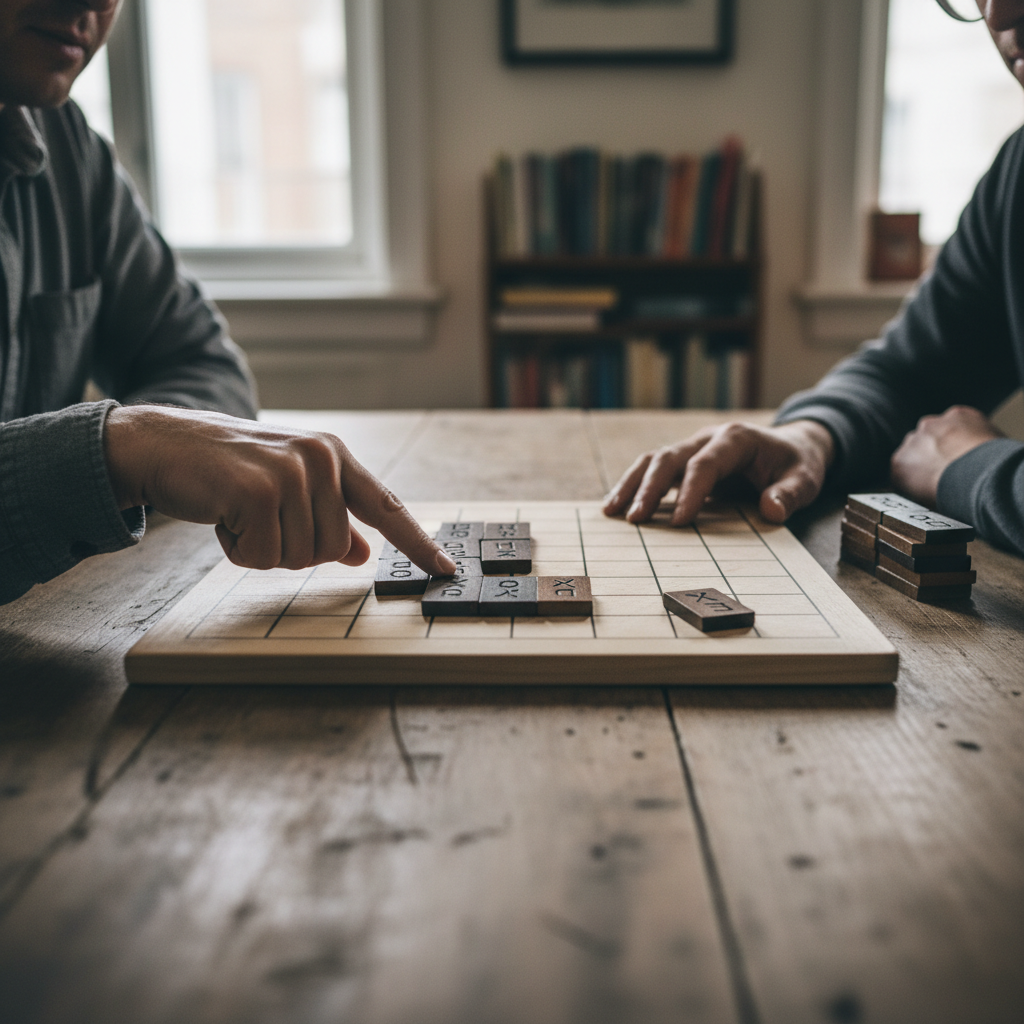
See a mistake? Call it.
If you think their equation is wrong, slam the Challenge tile and make your case. Get it right, steal their points. Get it wrong, you lose yours. This is where the table gets loud. Parents forget they're supposed to be teaching. Kids discover they actually know their multiplication tables. Everybody wins — except whoever miscounted.
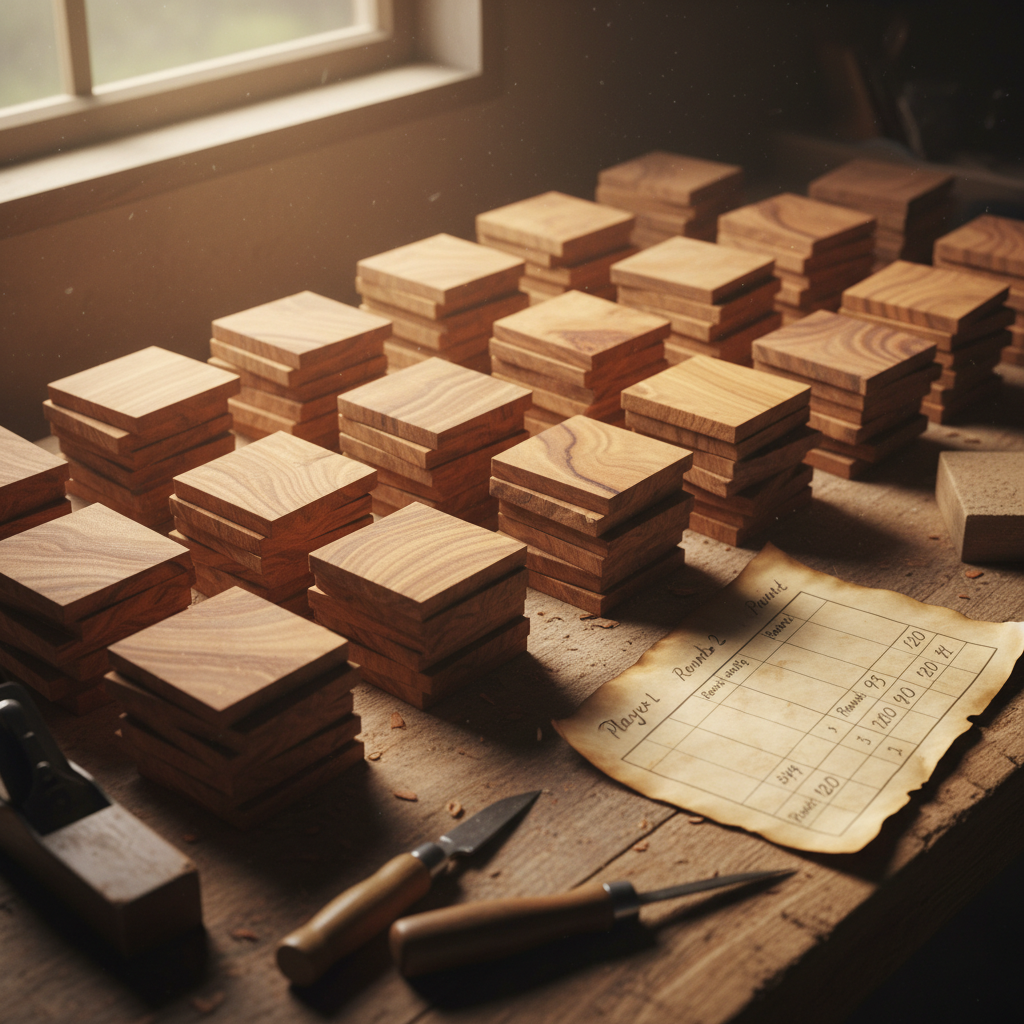
More tiles played, more points earned.
Every tile in a valid equation scores. Bonus points for using all seven. Double points if your equation includes a number your opponent played. By round four, the scoring gets deliciously complicated, and whoever said "it's just a math game" is now calculating point differentials in their head without realizing they're doing mental arithmetic. That's the whole trick.
Ready? Find Your LevelFind Your
Starting Level
Five quick questions. The tiles do the talking.
Which tile completes the equation?
From the table
Real Kitchens.
Real Results.
4.9 · 847 reviews
"My daughter asked to do math homework on a Friday night. I didn't know that was possible. We played four rounds and she didn't realize she'd been practicing her sevens the whole time."

Renata Okonkwo
Homeschool parent, 3 kids
"I bought the Classroom Set with my own money and I'd do it again. My third graders think they're playing a game. Their multiplication fluency scores went up 34% in six weeks. The tiles just work."

Marcus Delgado
3rd Grade Teacher, Jefferson Elementary
"I'm 71 and I bought this for my grandchildren. Turns out I play it more than they do. We had a tournament last Thanksgiving that lasted three hours. Best rainy Saturday I can remember."

Dorothy Finch
Grandmother of 4
Pick Your Set.
Start Playing Today.
Every set ships in 2–3 days. Not sure which one? The quiz above will tell you.
Starter Set
For kitchen tables
The complete first game experience. 60 hand-sanded wooden tiles, a velvet draw bag, illustrated rules booklet, and a 50-round score pad.
- 60 hand-sanded wooden tiles
- Velvet draw bag
- Illustrated rules booklet
- Score pad (50 rounds)
- 2–4 players
- Ages 6+
Classroom Set
For teachers who care
Four complete sets, a teacher's guide with 12 curriculum-aligned lesson plans, laminated rules cards for every desk, and a stackable storage tray.
- 4× complete sets (240 tiles)
- Teacher's guide (12 lessons)
- Laminated rules cards ×30
- Stackable storage tray
- Up to 24 players
- Grades 1–5 aligned
Tournament Set
For the competitive household
Extended play with 120 tiles including fraction and exponent tiles, a tournament rulebook, timed challenge cards, and a magnetic scoreboard.
- 120 tiles (incl. fractions)
- Tournament rulebook
- Timed challenge card deck
- Magnetic scoreboard
- 2–6 players
- Ages 9+